
Prix Arts numériques


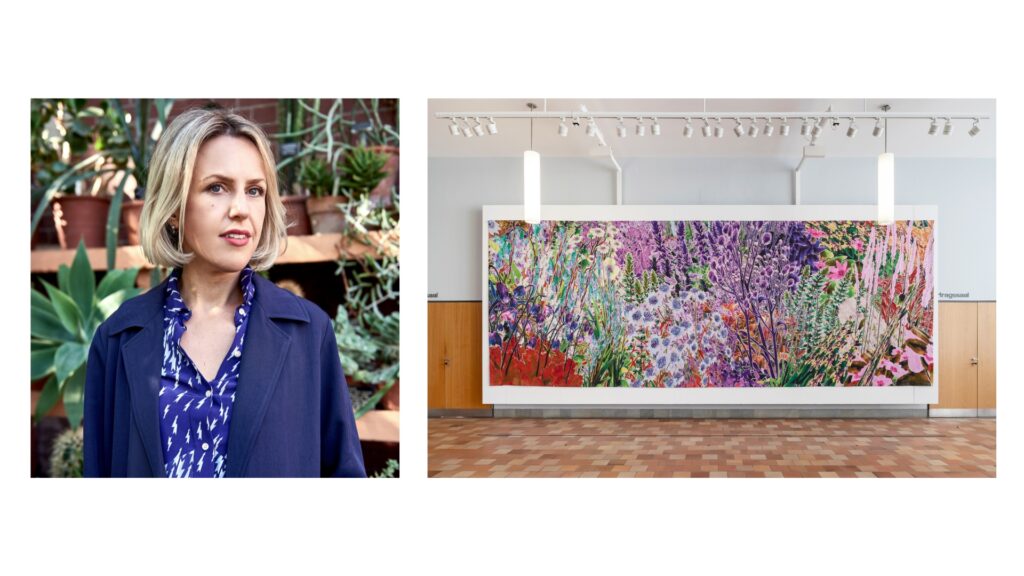
Born in 1982, Alexandra Daisy Ginsberg is a British artist who explores the evolving relationships between humans, nature and technology through sculpture, installation, living gardens and digital tools. In 2023, she won the European Commission’s S+T+ARTS Grand Prize for Pollinator Pathmaker, an algorithmic work designed for pollinators. Her works have been exhibited at venues including MoMA in New York, the Centre Pompidou in Paris and the Royal Academy of Arts. She holds a PhD from the Royal College of Art, was awarded the title of ‘Royal Designer for Industry’ in 2025 and is artist-in-residence at Somerset House Studios in London.
Polinator Pathmaker is an algorithmic artwork that generates planting plans optimised to promote pollinator diversity rather than human aesthetics. In response to the decline in pollinator populations, the project proposes an alternative technological model: an altruistic algorithm that prioritises non-human life. Presented in the form of living artworks, a participatory digital platform, printed materials and tapestries, it explores the transposition of digital systems into material and sensory experiences. The tapestry Pollinator Pathmaker: Perceptual Field 7SzzLn6GnY97DSo7hCSLMf (2025) is an algorithmic artwork comprising 7,819 plants across 66 species. It transforms this composition into a large-scale textile work, evoking the perception of floral forms and colours from the perspective of pollinators. At the intersection of art, technology and ecological research, this project offers a new approach to digital art in the service of living organisms.
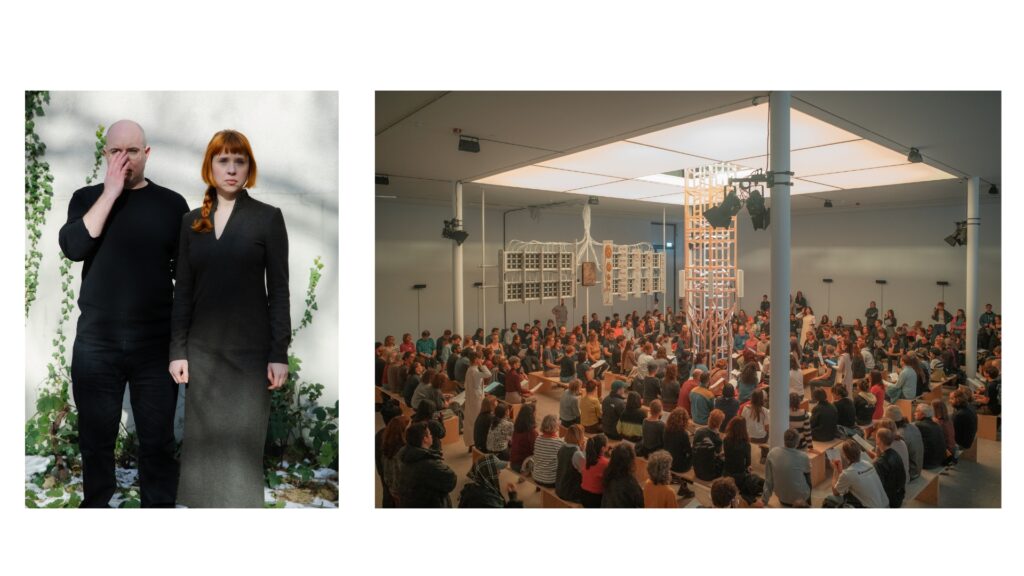
Holly Herndon and Mathew Dryhurst are two Berlin-based artists whose work explores the links between art, artificial intelligence, music and the governance of technology. Through their practice, they develop ‘protocol-based art’, intervening directly in digital systems and infrastructure. As co-founders of Spawning in 2022, they have notably helped to shape the debate on copyright and the use of works in AI training. Their creations have been exhibited at major international institutions, including the Serpentine Gallery in London and the Whitney Biennial in New York in 2024. In 2026, they presented Strange Rules at the Palazzo Diedo in Venice. Holly Herndon has received several awards, including the Ars Electronica STARTS Prize (2022) and the Kairos Prize (2025). Mathew Dryhurst is a research associate at the HAI Lab and a member of the Institute for Ethics in AI at the University of Oxford.
Starmirror (2025) is an immersive installation combining sound, imagery and artificial intelligence, created by Holly Herndon and Mat Dryhurst in collaboration with the architecture studio sub. The work explores the links between AI and collective creation through the participation of choirs, whose voices help to train an artificial intelligence model. It draws inspiration in particular from Hildegard von Bingen and her Ordo Virtutum (1151), a medieval musical work whose compositions are reinterpreted using machine learning. By combining musical heritage, contemporary technologies and public participation, Starmirror examines how AI can become a collective creation and a common good.
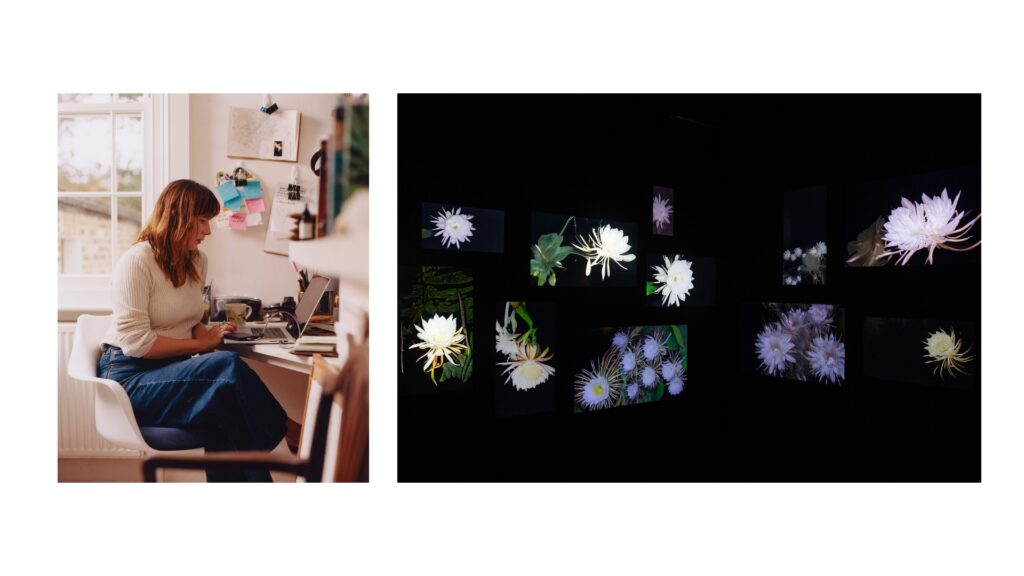
Born in 1985, Anna Ridler is a British artist and writer whose practice explores complex systems – whether technological, financial or ecological – and the ways in which they both reveal and conceal. She designs machine-learning systems and compiles her own datasets; her work thus lies at the very heart of these technologies rather than offering an external commentary. She holds a Master’s degree in Information Experience Design from the Royal College of Art and a Bachelor’s degree in English Language and Literature from the University of Oxford; she was also a fellow at the Creative Computing Institute at the University of the Arts London. Her work has been exhibited internationally, notably at the Buk Seoul Museum of Art, the ZKM in Karlsruhe, the University of Oxford, the Barbican Centre, the HEK in Basel, the Centre Pompidou, the Tokyo Photographic Art Museum, the MIT Museum, and on the screens in Times Square. Her works are included in the permanent collections of the Whitney Museum of American Art, the Centre Pompidou, the Victoria and Albert Museum, M+ and the ZKM. In 2025, she was named ‘Digital Artist of the Year’ alongside Sofia Crespo by Arab Bank Switzerland; she is represented by the Nagel Draxler gallery.
Circadian Nocturne (2023) is an installation comprising AI-generated animations depicting nocturnal flowers, originally commissioned for Times Square’s ‘Midnight Moment’. In the absence of an official record of these nocturnal flowers, deemed to be of no economic interest, the artist compiled her own archive by consulting scientists and cultivating certain plants, before training neural networks using this data. White in colour to reflect moonlight and attract their pollinators, these flowers are now transposed into a setting bathed in constant artificial light. The work illustrates Ridler’s approach: archiving what official systems overlook and using AI to reveal the clash between different systems of value and temporality.
“These three works remind us that artistic innovation in the digital realm is also fuelled by patience, an awareness of the living world, and memory. From the musical legacy of Hildegard of Bingen to botanical knowledge, their creators draw upon the arts and sciences to give new form to what they observe and what they have inherited from the past. It is this convergence that we wish to encourage through the Academy of Fine Arts. Our prize-winner, Anna Ridler, embodies this perfectly: in *Circadian Nocturne*, the precision of botanical observation meets the inspiration of Chopin’s nocturnes to invite us to discover, through poetry, the rhythms of life that escape our notice.” Miguel Perez de Guzman, General Delegate of the Etrillard Foundation