
Prix Arts numériques


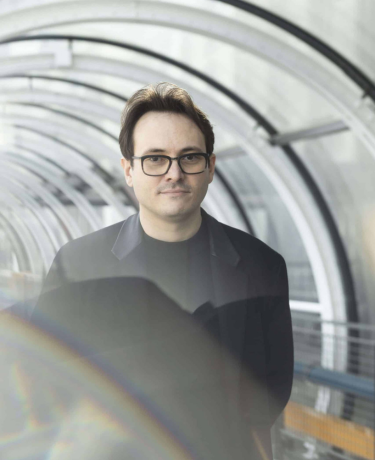
Art Historian and Curator of the New Media at the Centre Pompidou
After studying art history at the École du Louvre and law at Paris-Sud University, Philippe Bettinelli passed the competitive exam to become a heritage curator. From 2015 to 2020, he worked at the National Center for the Visual Arts (CNAP) as a curator in charge of the public art collection and later the visual arts collection (1961–1990). In 2020, he joined the Centre Pompidou’s New Media Department, which houses a collection of over 2,600 works in the fields of video, sound, and digital art, ranging from 1960s video art to recent NFTs. He regularly curates exhibitions, including “Sans objet : 9 œuvres abstraites pour le navigateur internet”, “Mode d’emploi : suivre les instructions de l’artiste”, ou encore “Chine, une nouvelle génération d’artistes”.
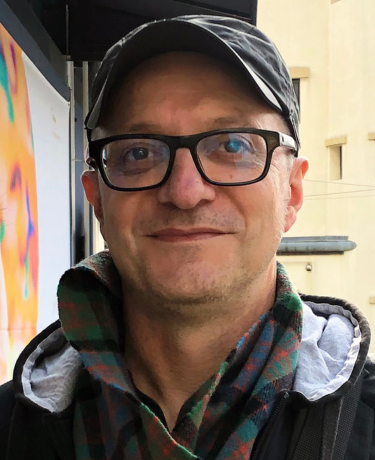
Artist and Professor at Paris 1 Panthéon-Sorbonne University
Jean-Marie Dallet has been an artist with the SLIDERS_lab collective since 2005. The collective’s multifaceted practice spans audiovisual installations, performance, sculpture, design and experimentation. His works and research have been exhibited in France (Biennale Artifices, Villette Numérique, Le Fresnoy, etc.) and internationally (Update Biennial in Belgium, Ars Electronica Festival in Austria, ICC Biennale in Japan, etc.).
He is also a curator and Professor at the École des Arts de la Sorbonne, Paris 1 Panthéon-Sorbonne University. He is co-director of the work-study Master’s programme “Management de l’Innovation Arts & Industries Créatives” and co-head of the “Arts, Sciences, Sociétés” research area at the ACTE Institute.
He edited the publications Cinéma, interactivité et société (2013) and Architectures de mémoire (2019), as well as the catalogue for the exhibition Mémoires vives. From Nam June Paik to SLIDERS_lab (2019).
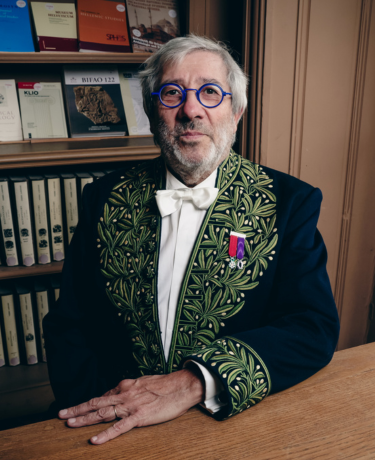
Physicist, Member and Delegate for Scientific Information and Communication at the French Academy of Sciences
Patrick Flandrin is Emeritus Research Director at the French National Centre for Scientific Research (CNRS). He works at the Physics Laboratory of the École Normale Supérieure de Lyon and is a specialist in signal processing.
Since obtaining his PhD in 1982, he has pursued research in three main areas. First, he has made theoretical and algorithmic contributions to the time-frequency analysis of non-stationary signals, leading to the publication of two monographs: Temps-Fréquence (Hermes) and Explorations in Time-Frequency Analysis (Cambridge University Press). He has also played an active role in the development of wavelet theory, particularly through contributions to the multiresolution analysis of scale-invariant processes. More recently, he has focused on the study of complex systems related to human activities, using graph- and network-based approaches.
He was elected to the French Academy of Sciences in 2010 and served as its President from 2021 to 2022, before becoming its Delegate for Scientific Information and Communication.
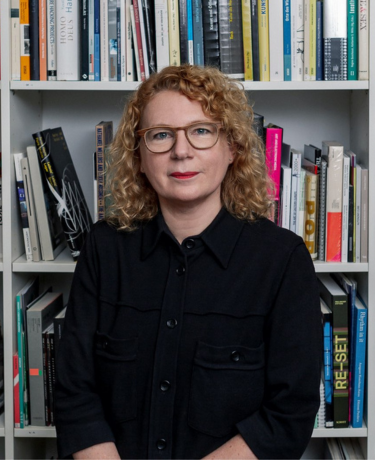
Art Historian, Director of HEK (House of Electronic Arts), Basel
After studying art history in Munich, Sabine Himmelsbach worked for galleries in Munich and Vienna from 1993 to 1996, before becoming a project manager for exhibitions and symposiums at the Steirischer Herbst Festival in Graz. In 1999, she became Head of Exhibitions at ZKM | Center for Art and Media Karlsruhe. From 2005 to 2011, she directed the Edith-Russ-Haus for Media Art in Oldenburg. In 2011, she curated “Gateways. Art and Culture in the Network Society” at Kumu, the Art Museum of Tallinn, Estonia. Since 2012, she has been Director of HEK (House of Electronic Arts) in Basel.
Her exhibition projects at HEK include “Poetics and Politics of Data” (2015), “Rafael Lozano-Hemmer: Preabsence” (2016), “unREAL” (2017), and “Entangled Realities. Living with Artificial Intelligence” (2019). In 2022, she curated the exhibition “Earthbound – In Dialogue with Nature” for Esch-sur-Alzette, Luxembourg, European Capital of Culture. She regularly addresses topics related to media art and digital culture through lectures and publications.
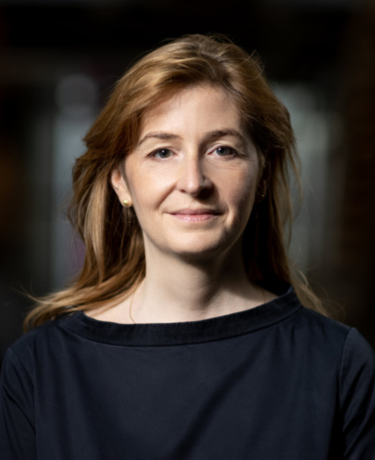
Head of Collections, Archives and Research at ZKM | Center for Art and Media Karlsruhe
Margit Rosen studied art history, political science, philosophy and digital arts at Ludwig Maximilian University of Munich, the Karlsruhe University of Arts and Design (HfG), and Paris 1 Panthéon-Sorbonne University. In 2016, she was appointed Head of Collections, Archives and Research at ZKM | Center for Art and Media Karlsruhe. She has taught at the Karlsruhe University of Arts and Design (HfG) and at CAFA Beijing, and is a faculty member of the Media Art Histories Master’s Programme at the Danube University Krems. In 2011 and 2013, she was a visiting professor at the Münster Academy of Art, and in 2014 at the University of Milan. Her research, publications and curatorial work focus on 20th- and 21st-century art, with a particular emphasis on the history and aesthetics of digital arts.
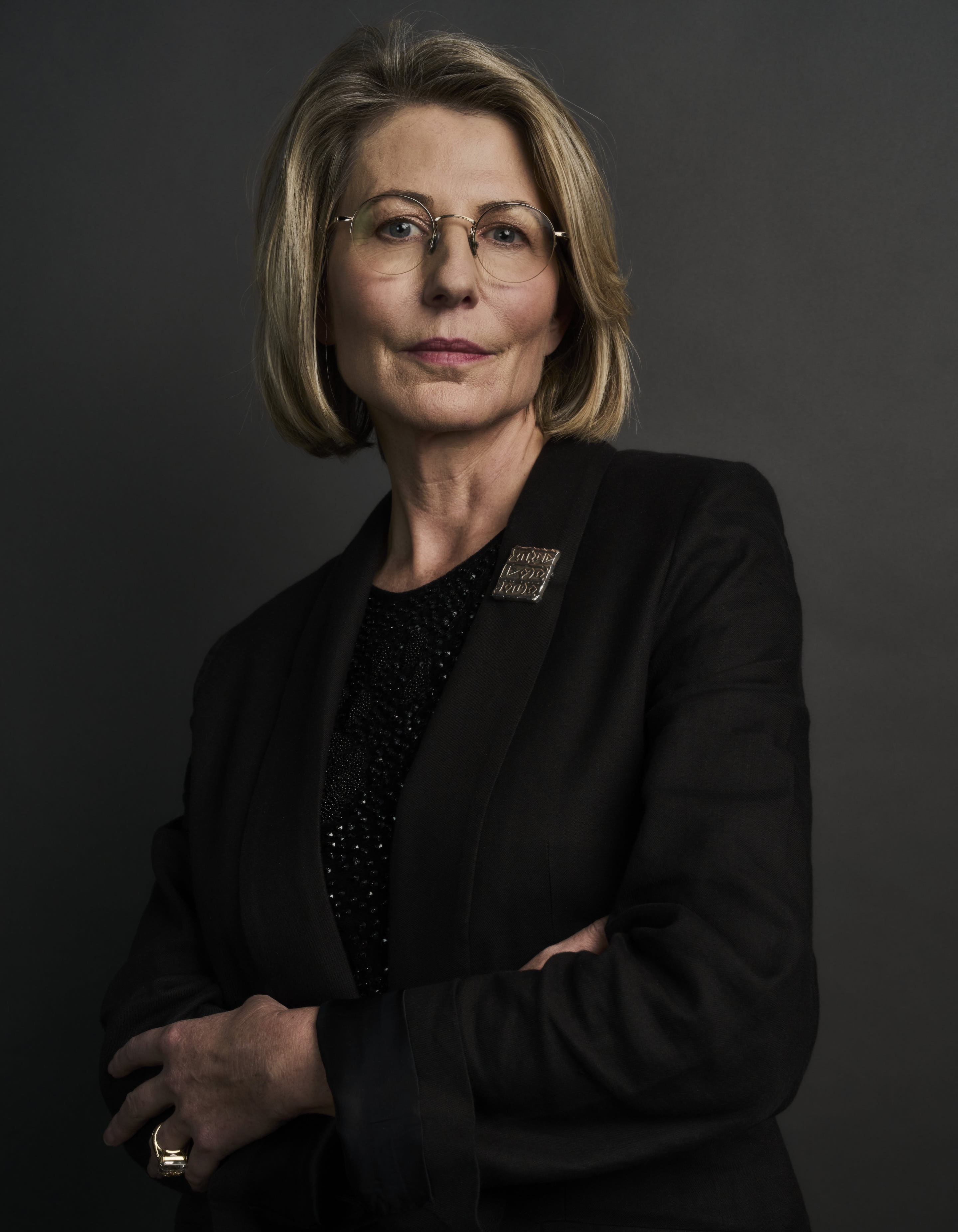
Professor of Digital Museology, School of Computer and Communication Sciences, École Polytechnique Fédérale de Lausanne (EPFL), Switzerland
Dr Sarah Kenderdine is a leading figure in the development of innovative interactive and immersive experiences for galleries, libraries, archives and museums. She is a professor at the École Polytechnique Fédérale de Lausanne (EPFL), Switzerland, where she leads the Experimental Museology Laboratory (eM+). She has created more than 110 major exhibitions and installations.
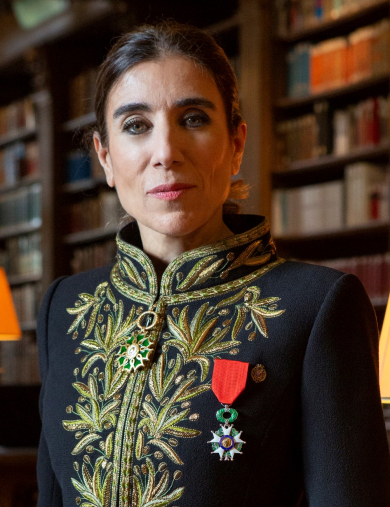
Choreographer, film director, dancer, and actress; member of the Académie des beaux-arts
Born in Granada in 1964, Blanca Li is a choreographer, dancer, film director, and theater director. Trained in New York at the Martha Graham School, she also studied at the Alvin Ailey studios before founding her first company in Madrid, followed by her company in Paris in 1993. A proponent of innovation, fusion, and constant reinvention, she draws inspiration from a wide range of artistic expressions, from flamenco to classical ballet to urban dance. She has created numerous hybrid works combining video, immersive sound, dance, and mixed reality, such as Le Bal de Paris, an immersive virtual reality performance that won an award at the Venice International Film Festival in 2021. Artistic director of the Teatros del Canal starting in 2019, then president of La Villette in 2024, she continued her exploration of technology in 2025 with *L’Ombre*, a mixed-reality performance created at the IRC – Centre Pompidou in collaboration with her colleague Edith Canat de Chizy. On April 24, 2019, she was elected a member of the choreography section of Académie des beaux-arts.