

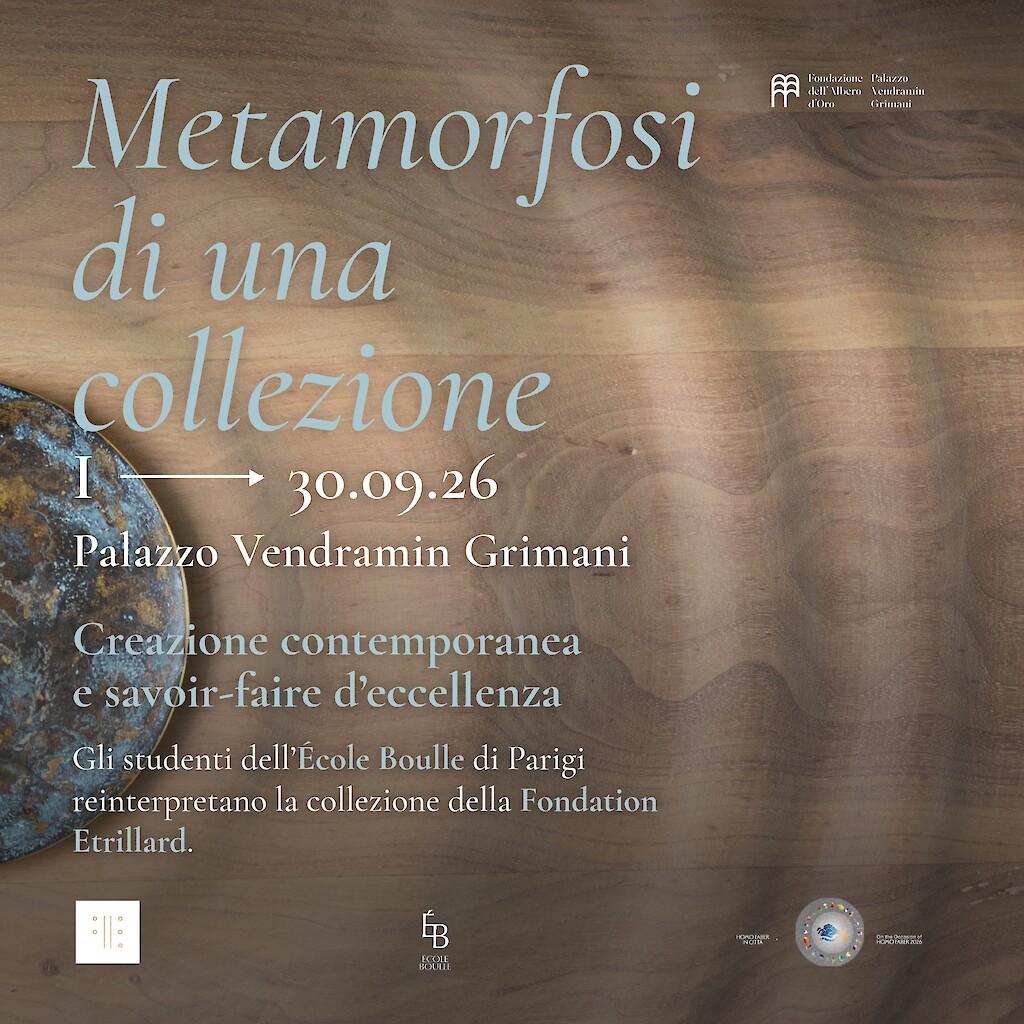
From 1 to 30 September 2026, to mark the fourth edition of Homo Faber, the Fondation Etrillard is collaborating with the Fondazione dell’Albero d’Oro to present the exhibition Metamorfosi di una collezione at the Palazzo Vendramin Grimani. This exhibition explores the dialogue between the Foundation’s historical heritage and the creativity of the new generation of craftspeople and designers from the École Boulle in Paris.
Organised jointly by the Fondazione dell’Albero d’Oro, the Fondation Etrillard and the École Boulle, this exhibition showcases two masterpieces from the Fondation Etrillard’s collection – emblematic of the refinement of 18th-century European decorative arts – alongside the twelve contemporary pieces they have inspired. Produced by students as part of the ‘Collection: Source of Inspiration’ Prize, these creations are the work of two successive promotions, each of which took one of the two historical works as its starting point. The exhibition design, conceived entirely by students at the École Boulle, takes over the ground floor of the Palazzo Vendramin Grimani and reveals how an ancient heritage remains a vibrant source of research and creation.
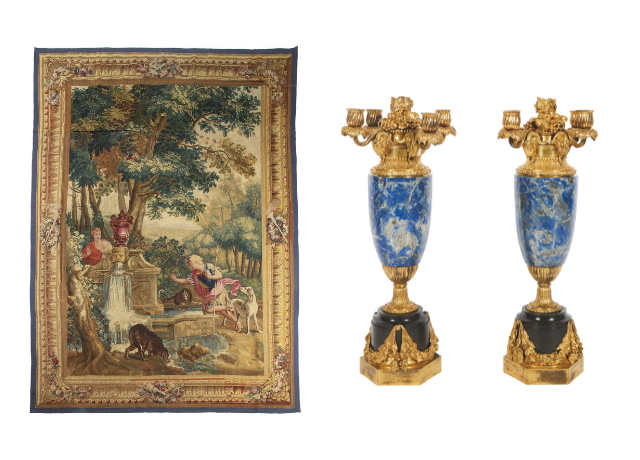
These two sources of inspiration are a pair of candelabra vases in lapis lazuli and gilded bronze, attributed to Jean-Étienne Forestier (1770–1780), and the tapestry Narcissus and Echo, a monumental work woven after 1714 by the Royal Gobelins Manufactory based on a cartoon by Antoine Dieu. Inspired by these references, the students’ creations build upon and reinterpret their materials, iconography and narratives, translating them into the language of contemporary design and the arts and crafts.
The exhibition is structured around four thematic sections — Resurgence, Fragmentation, Incarnation and Emanation — which invite visitors to discover different ways of transforming and reinterpreting heritage.
Resurgence revisits the customs and rituals of the past through works dedicated to conviviality, light and scent, offering a contemporary interpretation of everyday objects. Fragmentation explores the theme of metamorphosis by deconstructing images and meanings, drawing on the myth of Narcissus and Echo, to examine identity and perception in the digital age. Incarnation creates a dialogue between materials, nature and artisanal craftsmanship, lending a living, dynamic presence to historical works. Finally, Emanation shows how works from the past continue to generate new narratives, in which water becomes the common thread linking myths, emotions and memories.
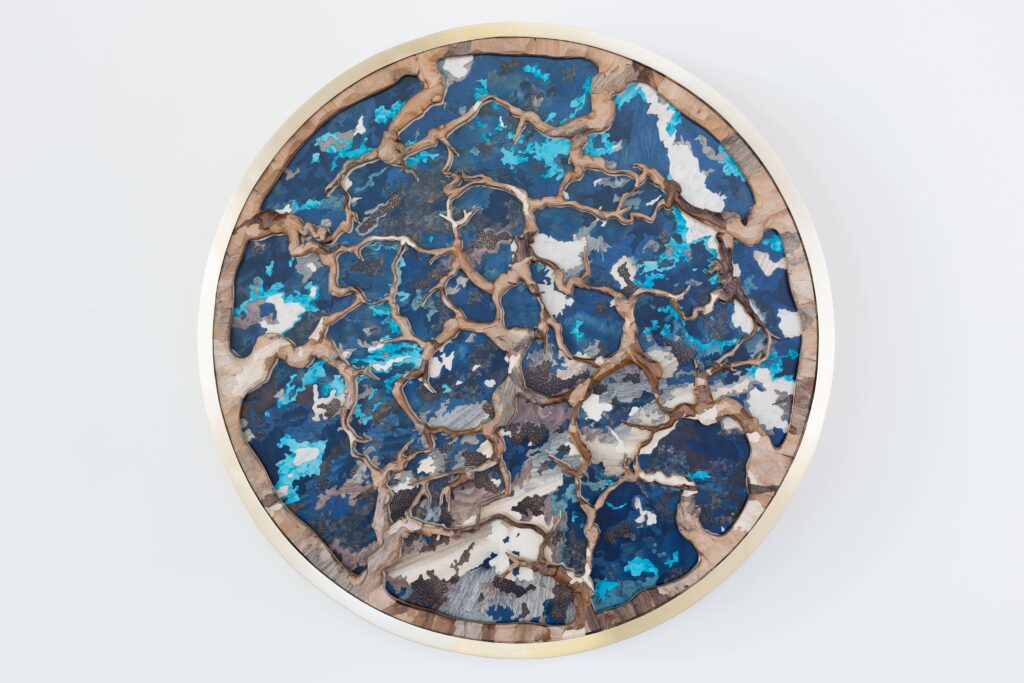
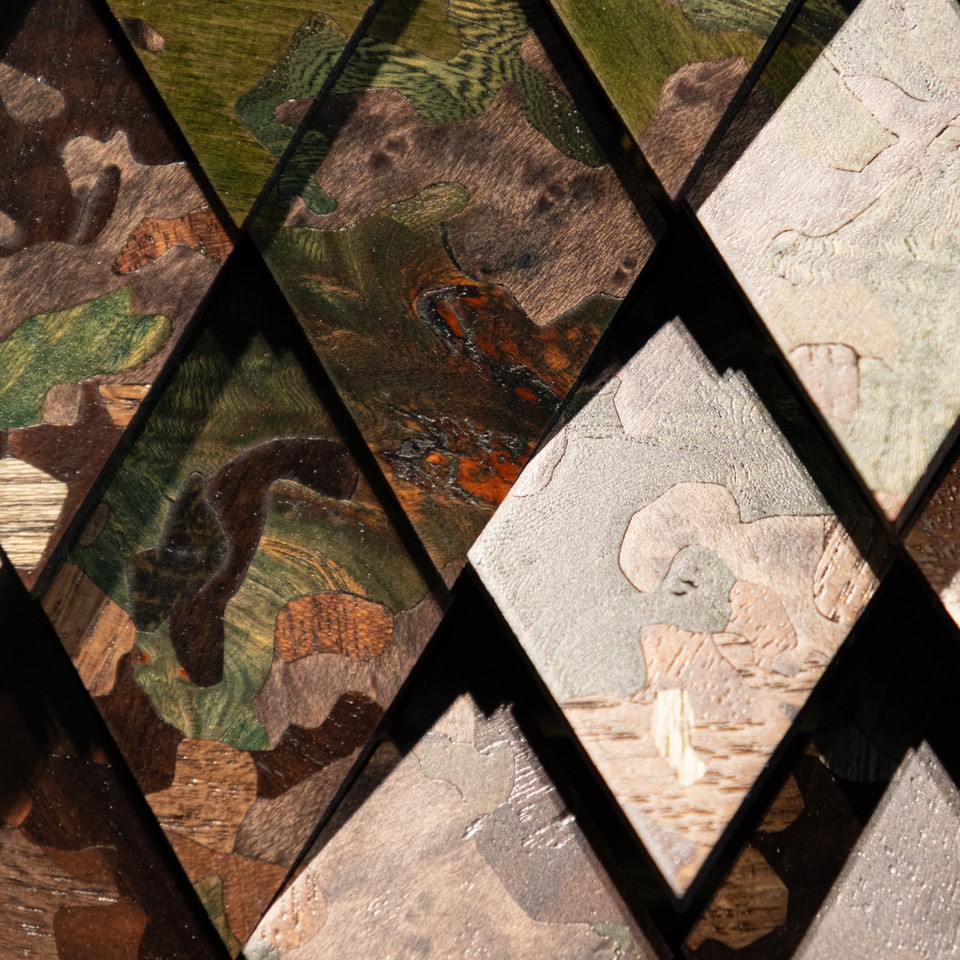
Among the works on display, two creations that have won the ‘Collection: Source of Inspiration’ prize hold a special place. L’écho du feuillage by Karl Ringelstein, the prize’s first winner, draws inspiration from the foliage in the tapestry Narcissus and Echo. This marquetry panel, a true barometer of connected art, comes to life to reflect the current weather conditions: its foliage, animated by a restrained, cyclical rhythm, evokes the nymph Echo, condemned to repeat the last words she hears. Comprising 2,700 unique pieces and the result of over 500 hours’ work, this piece brilliantly combines aesthetic reinterpretation with functionality. En Deux Temps by Agathe Quissac, the 2024–2026 prize-winner, engages in a dialogue with the candelabra vases of the Fondation Etrillard: this kinetic wall panel juxtaposes 18th-century heritage with contemporary creation through the themes of duality and movement.
The exhibition also marks the highlight of the ‘Collection: A Source of Inspiration’ programme, launched in 2022 by the Fondation Etrillard in collaboration with the École Boulle. This programme invites students to draw inspiration from the works in the Foundation’s collection to devise contemporary creations that breathe new life into their meaning and anchor them in the present.
Through Metamorfosi di una collezione, the Fondation Etrillard reaffirms its commitment to encouraging dialogue between heritage, education and contemporary creation, and demonstrates how historical collections can continue to inspire knowledge, experimentation and new forms of artistic expression.
📍 Palazzo Vendramin Grimani, Venice
🗓 1–30 September 2026
🎟 Book your visit here
In September 2025, the Bibliothèque de Versailles, in collaboration with the Ministry of Foreign Affairs, presented to the public a unique exhibition devoted to the history of French diplomacy under the Ancien Régime. This exhibition, the first of its kind for the institution, provided an opportunity to reconnect with the prestigious history of its historic building, the former headquarters of the Ministry of the Navy and Foreign Affairs under Louis XV and Louis XVI.
The Foundation first partnered with the Versailles Municipal Library in 2023, on the occasion of the exhibition « Trésors des Bibliothèques de Versailles » (‘Treasures of the Libraries of Versailles’). At that time, it had funded the restoration of two exceptional documents: the handwritten notes of an assistant to the sculptor Jean-Antoine Houdon, and a copy of the first Brussels edition of Miguel de Cervantes’ Nouvelles exemplaires.
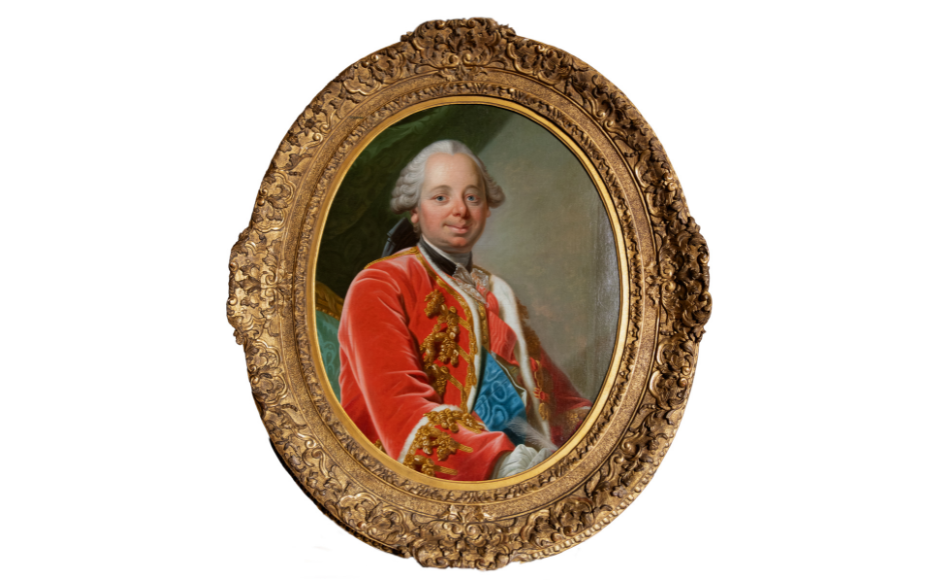
In keeping with this commitment, the Foundation was delighted to partner once again with the Versailles Municipal Library to support the catalogue for the exhibition ‘Excellences! Foreign Affairs under the Ancien Régime’. Organised by the library in collaboration with the Ministry of Foreign Affairs, this event offered visitors the opportunity to view items from the royal libraries and the personal collections of prominent diplomats, bearing witness to key moments in French diplomacy. It also highlighted the rich history of the venue hosting the exhibition — the former Ministry of the Navy and Foreign Affairs under Louis XV and Louis XVI, where part of the treaty recognising the independence of the United States was negotiated.
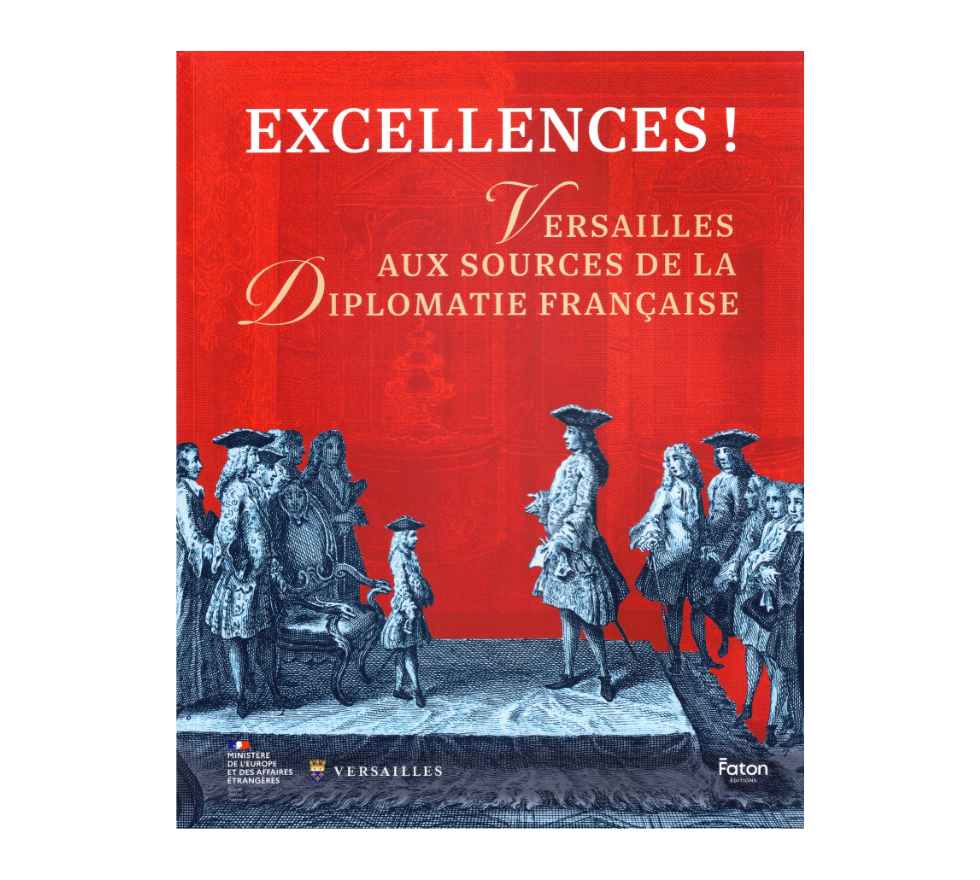
Supported by the Fondation Etrillard, this catalogue brings together contributions from numerous historians and experts in diplomacy; we had the honour of writing the foreword to this volume.
The Institut national du patrimoine is the higher education establishment of the Ministry of Culture specializing in the training of heritage professionals. Unique in Europe, it combines training for two complementary professions: heritage curator and heritage conservator-restorer, in Paris and Aubervilliers. Each year, the Inp selects about 50 curator students and only 20 conservator-restorer students.
For the latter, the completion of the final year thesis on a work chosen by them crowns an entire year of investment and research.
Lauriane Boudeau – student specializing in fire arts – metal. Study and conservation-restoration of two “telrin” or Tuareg arm daggers with their scabbards, late 19th century – early 20th century, preserved at the Musée des explorations du monde, Cannes © Chloé Bernard / Inp
Committed to projects that develop the know-how of art professions and restoration workshops, the Etrillard Foundation wished to provide its help starting this year to conservation-restoration students training at the Inp. Thus, it decided to create a study grant dedicated to funding the fifth and final year of training for a heritage conservation-restoration student.
Thanks to this grant, the student will be able to complete their work, the results of which will be presented to the public during the thesis defenses taking place in September 2025 at the Galerie Colbert auditorium.
This donation represents a long-term investment in the promotion of know-how, its transmission, and the maintenance of high-level skills in this specialized field.
Fanny Herr – 5th-year training student – painting specialty. Study and conservation-restoration of an oil on canvas by Amélie Beaury-Saurel entitled “Nos filles” (Our daughters), late 19th century – early 20th century, preserved at the Musée de La Roche-sur-Yon. © Chloé Bernard / Inp
The Fondation Etrillard owns an exceptional pedestal table in gilt bronze, patinated bronze and Bardiglio marble. The model, undoubtedly created under the direction of a merchant dealer like Dominique Daguerre, was probably made around 1785-1790 by one of the greatest 18th-century bronzemakers, François Rémond. At least four other examples are known, all slightly different, two of which are in public collections: one in the Musée Nissim de Camondo, the other in the Spanish royal collections. The copy in the Fondation Etrillard belonged to great collectors of the twentieth century: Arnold and Jean Seligmann, then Helena Rubinstein.
The pedestal table in the Foundation has a gap in its design: an alabaster, an amphora-shaped perfume vase used to perfume the room, is missing from the underside of the table.
The pedestal table in the Patrimonio Nacional, owned by the Spanish State, is the most complete of the four examples and the only one to have retained its alabaster.
Patrimonio Nacional’s mission is to administer and manage the assets belonging to the Spanish State affected by the use and service of the King and members of the Royal Family, making it one of the most important cultural ensembles in Europe.
Patrimonio Nacional has granted the Fondation Etrillard a 3D digitisation of the pedestal table’s alabaster in its royal collection, to help it restore its alabaster and contribute to a better understanding and dissemination of its collections.
Founded in 1886, the École Boulle is an internationally renowned school of arts and crafts and furniture restoration.
Already a partner of the Fondation Etrillard for an educational programme based around its art collection, the École Boulle made two of its teachers (Cabinetmaking and Chiselling Workshops) available to visit the Palacio Real de El Pardo. They photographed and digitised the Spanish alabaster in 3D, so that a copy could be made in France to complement our pedestal table.
Just like the building that houses them, the history of the organs of the Saint-André Cathedral in Bordeaux spans centuries. Mention is made of an organ as early as the beginning of the 14th century. Since then, several instruments have succeeded one another almost without interruption to the present day. The current organ was built in the 1970s within an imposing casing, classified as a Historic Monument, and one of the largest in France with its 18th-century lines. An instrument of a rich musical life for nearly 40 years, it suffered from numerous construction and maintenance problems as soon as it was installed in the cathedral.
This organ will thus be the subject of a complete reconstruction, accompanying the cultural revival of the building and crowning its interior restoration. It will regain its splendor thanks to the action of the Cathedra association, which has become one of the main cultural stakeholders in the Bordeaux metropolis.
Excellence, high standards, acoustic and material quality, creativity, and innovation will be the watchwords of this achievement.
The Fondation Etrillard is pleased to contribute, alongside the French State, local authorities, and other patrons, to these major works, which total over 3 million euros. The work, lasting 3 years, will be launched in the winter of 2024, in parallel with the interior restoration of the cathedral’s nave. On this occasion, the Foundation is supporting the musical season of the Bordeaux Cathedral.
The Kunsthistorisches Museum in Vienna preserves a unique treasure in its collections: the Imperial Crown. Associated with the legendary Charlemagne, this crown was venerated as a sacred relic of the sovereign and retained its status as insignia of the Holy Roman Empire. It remained in use until the last coronation in 1792, etching itself into memory as one of the most important and evocative symbols of European history.
However, its use over several centuries has not only favored its conservation. It has led to numerous losses, damage, and repairs that have had a considerable impact on its current condition and appearance.
Ideal portrait of Charlemagne (747-814), copy after Albrecht Dürer (1471-1528), late 16th or early 17th century. KHM-Museumsverband, Gemäldegalerie
In 2022, the museum launched the “CROWN Project”: an interdisciplinary research project to better understand the materials, technology, and conservation status of the Imperial Crown. It brings together art historians, conservators, and scientists who are utilizing their expertise, know-how, and respective approaches to develop a collaborative research platform. For the first time, the object’s components, techniques, interventions, and alterations have been comprehensively analyzed and documented. Furthermore, a number of goldsmith objects from the same period (10th and 11th centuries) were selected to gain further information on materials and techniques used elsewhere. All this data is studied and analyzed by museum experts in collaboration with specialists from institutions such as the Louvre and the C2RMF in Paris, the Rathgen Forschungslabor in Berlin, and the Bavarian State Library in Munich.
The “CROWN project” will be completed at the end of 2024. It will allow for observations and results even more relevant and surprising than anticipated, which will subsequently be made available and accessible to the general public. Among other data, approximately 30,000 digital 3D microscopic images have been created. These images offer an unprecedented insight into the crown’s structure, its manufacture, and its state of conservation. Over 1,750 individual components have been detected, many of which are complex structures themselves. Technical drawings aim to “translate” the information and provide a clear and precise understanding not only for researchers but also for less experienced observers.
This project contributes to making culture accessible: it makes the scientific results of the “CROWN project” available to a wide audience through drawings and a 3D digital model, including schoolchildren, young people, and those interested in new technologies.
Thanks to the support of the Fondation Etrillard, the Museum will be able to produce a large number of drawings as well as the model of the crown. A documentary on the project will be presented on Austrian television by the end of 2024.
Read the Paris Match article: “The Imperial Crown of the Holy Roman Empire: gold, enamel, 172 stones and over 800 pearls”
The Etrillard Foundation is the lead patron of the three-year project for the analysis, restoration, and exhibition of a treasure of our medieval heritage, which left its mark on art history: the Très Riches Heures du duc de Berry.
A true icon of the Middle Ages, the Très Riches Heures du duc de Berry is the jewel of the Condé Museum collections at the Château de Chantilly. It is a prestigious and exceptional manuscript both in its artistic quality and ornamental refinement, as well as its rich iconography. Painted in France in the 15th century, it alone forms a museum of 131 paintings depicting fairytale castles, princely scenes, and agricultural labor following the immutable rhythm of the seasons.
In accordance with the wishes of its donor, the Duke of Aumale, the manuscript cannot be exhibited outside the Condé Museum where, due to its fragility and preciousness, it is usually kept out of sight in a safe place.
The manuscript’s case (1867) © RMN – Grand Palais Domaine de Chantilly / Michel Urtado
This illuminated masterpiece was commissioned around 1411 by the immense collector and bibliophile Jean, Duke of Berry—third son of the King of France, John II the Good—from three genius illuminators, the Limbourg brothers. It remained unfinished upon the death of all these protagonists in 1416. Throughout the 15th century, other illuminators succeeded one another to complete it, such as Barthélemy d’Eyck around 1446 for the royal family, and Jean Colombe around 1485 for Charles I of Savoy, who inherited it in turn.
From its installation in Chantilly and the first reproductions initiated by Henri d’Orléans, Duke of Aumale, who purchased it in 1856, this “cathedral-book” acquired worldwide fame that conferred upon it an iconic value. Today, it still shapes a poetic and ideal vision of the Middle Ages in the collective imagination.
Miniature of the month of May © RMN-Grand Palais / Domaine de Chantilly / Michel Urtado
This book of hours is as famous as it is discreet due to its great fragilization over time. Suffering from several disorders, the manuscript needed to be restored. The Condé Museum thus wished to ensure its safeguarding against signs of alteration, foster renewed knowledge about the manuscript, and showcase a masterpiece so it can continue to feed the imagination of future generations.
Facing these challenges, the Condé Museum benefits from the support of major French conservation and research institutions such as the Bibliothèque nationale de France and the C2RMF, and from the patronage of the Etrillard Foundation, the project’s lead sponsor.
The manuscript first made an exceptional stay in the laboratories of the Centre de Recherche et de Restauration des Musées de France (C2RMF) at the Louvre from March to May 2023. There, it benefited from the best imaging techniques and was explored in depth by conservators, who examined the fragile areas to better understand its alterations. A first in its history.
This corpus of images was then analyzed to better understand the book’s craftsmanship and iconography, especially the bold touch of its painters.
Miniature of the month of September and its grape harvest © IRHT CNRS / Bibliothèque du Château de Chantilly / Gilles Kagan
As the conclusion of this vast project, a landmark exhibition is being organized from June 7 to October 5, 2025, presenting the progress of research on the manuscript. These horae have indeed only been exhibited twice in the last century, in 1956 and 2024. This exhibition holds an international scope to honor the treasure of Chantilly, and to make its importance and power of fascination understood.
For the first and undoubtedly last time, the first unbound folios of the manuscript are shown to the public. The 26 pages of the calendar, the most famous ones, are all shown at once, before returning to their restored binding, thereby allowing a perfectly conserved masterpiece to be bequeathed to future generations.
This support aligns with the mission to rediscover the Middle Ages dear to the Etrillard Foundation, which it deploys across the various fields of art, craftsmanship, and the humanities, in Switzerland as well as in France.
Some of the Foundation’s sponsorships related to the medieval period:
– Exhibitions (Illuminated manuscripts from Switzerland at the Bodmer Foundation, Treasure of Notre-Dame de Paris at the Louvre Museum, Charles VII at the Cluny Museum)
– Restoration (illuminated manuscript of the Solesmes Abbey, reliquaries of the Treasure of the Saint-Maurice Abbey)
– Music (Philippe de Vitry symposium with the Haute Ecole de Musique (HEM) of Geneva, Singing the Ars Nova program with the Royaumont Abbey and Foundation)
While the Musée de l’Armée has just completed the restoration of the Salle Royale, one of the four emblematic refectories of the Invalides, a new renovation project is beginning in the Salle de l’Europe, designed as its counterpart.
A former refectory for the pensioners of the Invalides, it is today one of the major rooms in the “Ancient Arms and Armor” tour, dedicated to the activity of the great European armor production workshops of the 16th century.
Dôme des Invalides © Paris – Musée de l’Armée – Anne-Sylvaine Marre-Noël
As part of this renovation, the Fondation Etrillard is financing the restoration of The Allegory of Louis XIV, which overlooks the North entrance of the room. Attributed to Michel II Corneille, executed in oil on plastered stone, this large painting, both historical and mythological, depicts King Louis XIV accompanied by Bellona, Minerva, and Victory, heading towards the Meuse river, which already appears subdued.
With the last interventions dating back half a century, the frieze is today in peril, suffering from numerous liftings of the pictorial layer.
Its restoration, lasting three years, will reveal once again its full symbolic importance within the regal building. It will also allow the experts at the Musée de l’Armée to refine their knowledge of the various overpaintings of the artwork, as well as the pictorial techniques employed. A mediation system will accompany its return to the spotlight.
The Allegory of Louis XIV © Paris – Musée de l'Armée Dist. RMN-Grand Palais – Pascal Segrette
From September 16 to December 16, 2023, the Versailles Library is presenting a major exhibition showcasing its collections: “Treasures of the Versailles Libraries”.
This exhibition makes it possible both to present rare and unexpected pieces to the public (books from royal collections, libraries of historical figures, objects, and drawings) and to advance knowledge about these pieces through a number of case studies. From cuneiform tablets to masterpieces of contemporary bookbinding, it will present known or little-known treasures through a series of themes: antiquity, illustrious author, prestigious provenance, rarity of the edition, splendor of the materials, and aesthetic value.
Since some of these books require restoration before being presented to the public, the Fondation Etrillard is funding the restoration of two extremely rare pieces: the Exemplary Novels of Cervantes, an original 1614 edition that belonged to José Maria de Heredia, as well as the notebook of an assistant sculptor to Jean-Antoine Houdon.
These two manuscripts will be featured in the exhibition alongside other treasures, such as the “little secret book” written by Madame de Maintenon, the copy of La Partie de chasse de Henri IV by Charles Collé – probably the first book bound with the coat of arms of Marie-Antoinette – or original drawings by Fragonard for the Tales of La Fontaine.
The Fondation Etrillard is accompanying the Fondation des Monastères in supporting the restoration of a unique illuminated manuscript, the Manuscript of the Hours for the use of Rome, preserved at the Saint-Pierre de Solesmes Abbey in the Sarthe region. Initially a modest priory for a few monks for eight centuries, Saint-Pierre de Solesmes became an influential abbey in the 19th century under the impetus of its restorer, Dom Guéranger.
These horae are an illuminated work on parchment created by Anthoine Chappiel for the workshop of Germain Hardouin in 1497. It is one of the many treasures held in the library of the Solesmes Abbey, which boasts two hundred thousand volumes – liturgical books but also history, literature, and art in general.
The work was restored by La Reliure du Limousin, a workshop created in 1950 and a training center since 1990, whose 70 artisans daily restore ancient collections to ensure the perpetuation of written heritage.
The objective was the preservation of this precious opus through its restoration and its packaging in a custom-made protective case.
The manuscript was then exhibited at the International Cultural Heritage Fair at the Carrousel du Louvre (Paris) from November 2 to 5, 2023.
This restoration was the subject of comprehensive documentation by La Reliure du Limousin. All the working stages carried out by 4 different restorers are described therein: manual unbinding, cleaning, restoration of the parchments, sewing of the leaves, crafting of a headband, creation of a new binding, and a custom conservation box.